
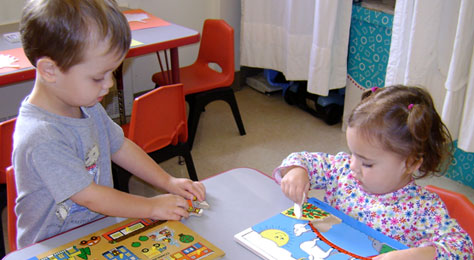


Social competence is an ability to take another’s perspective concerning a situation and to learn from past experience and apply that learning to the ever-changing social landscape. The ability to respond flexibly and appropriately defines a person’s ability to handle the social challenges that are presented to us all. Social competence is the foundation upon which expectations for future interactions with others are built and upon which children develop perceptions of their own behavior. Social experiences are intimately connected to emotional competence. It is rare that social competence is present without appropriate emotional functioning also present.
The concept of social competence frequently encompasses additional constructs such as social skills, social communication, and interpersonal communication. Social skills assume that these are behaviors that are repeatable and goal-directed (Spitzberg, 2003). Social interaction assumes that the goal can be accomplished through interaction with another person using language and nonverbal communication. These skills are also thought to be goal-directed. In addition to behaviors, social competence requires correct perception of the social interaction. This perception also encompasses motivation and knowledge on how to perform the skill. Without appropriate perception the motivation and ability to do the skill will not result in socially appropriate actions. Similarly without motivation, the skill will not be performed.
Social experience rests on the foundation of parent–child and peer relationships and is important in the later development of prosocial behaviors. Attachment of an infant to the mother is important for the development of later social competence (Greenberg et al., 1993; Speltz et al., 1999; van IJzendoorn, 1997). This attachment helps the infant to learn that the world is predictable and trustworthy or in less healthy instances that it is capricious and cruel. The foundation of the attachment bond allows the child to venture out from his/her mother to try new experiences and new interactions. Thus, the child brings a set of biologically determined aspects (or temperament) to the environment and the environment works on these aspects to modify and adjust to the biology. In turn the child’s temperament also influences the environment. Dodge (1986) conceptualizes social competence as an interaction between the environment and a set of biologically determined abilities. These biologically determined abilities may partially account for social difficulties frequently experienced by children with developmental disorders.
 |
| The concept of social competence frequently encompasses additional constructs such as social skills, social communication, and interpersonal communication. |
Relationships also differ within context. Social communication between husband and wives, brothers and sisters, friends, and other relationships vary depending on the social interaction. Skills valued in one relationship are not appropriate in another. The situation in which the interaction takes place is also important. Situations differ in type varying from casual to intimate and formal to informal. Behaviors in one setting are not
appropriate in another—the inability to be flexible depending on the context often contributes to social competence difficulties. Finally the function is important. Spitzberg (2003) states “communication does rather than just is” (p. 96). He uses the example that assertive behavior may be appropriate in one situation but not when trying to obtain something else such as affection or comfort.
When behaviors do not match the context and the child does not understand this mismatch, the child or adult often has difficulties relating to others. The example cited early in this chapter was of a child who literally translates language and reacts inappropriately to this miscommunication. It is not uncommon for these children to have difficulties with their peers and they are very often evaluated and found to have one or more psychiatric diagnoses. The following section discusses one way of understanding social difficulties.
appropriate in another—the inability to be flexible depending on the context often contributes to social competence difficulties. Finally the function is important. Spitzberg (2003) states “communication does rather than just is” (p. 96). He uses the example that assertive behavior may be appropriate in one situation but not when trying to obtain something else such as affection or comfort.
When behaviors do not match the context and the child does not understand this mismatch, the child or adult often has difficulties relating to others. The example cited early in this chapter was of a child who literally translates language and reacts inappropriately to this miscommunication. It is not uncommon for these children to have difficulties with their peers and they are very often evaluated and found to have one or more psychiatric diagnoses. The following section discusses one way of understanding social difficulties.


